Buy magicclub.eu ?
We are moving the project
magicclub.eu .
Are you interested in purchasing the domain
magicclub.eu ?
domain@kv-gmbh.de · 0541-91531010
Buy magicclub.eu ?
Is Simple Present and Present Simple the same thing?
Yes, "Simple Present" and "Present Simple" are the same thing. They both refer to the tense used to describe actions that happen regularly, habits, general truths, and scheduled events in the present time. Both terms can be used interchangeably to describe the basic present tense in English grammar. **
Can you help me form or rearrange simple sentences in the Simple Present and Simple Past?
Yes, I can help you form or rearrange simple sentences in the Simple Present and Simple Past. For example, in the Simple Present, you can say "I eat breakfast every morning" or "She goes to the gym after work." In the Simple Past, you can say "I visited my friend yesterday" or "They watched a movie last night." If you have specific sentences you'd like help with, feel free to provide them and I can assist you in forming or rearranging them. **

Similar search terms for Simple
Top-Angebote
Products related to Simple:
-
Simple Living Essex DeskReach for your journals, pens, and markers stored neatly in the three open compartments of this writing desk. Two drawers hold your files and other work essentials, and the central compartment features a grommet hole for mess-free cord management.64,99 $*Shipping: 0,00 $Secure redirect to the provider




-
What is the difference between Simple Past and Simple Present?
The main difference between Simple Past and Simple Present is the timeframe they refer to. Simple Present is used to talk about actions that are happening now or regularly occur, while Simple Past is used to talk about actions that were completed in the past. In Simple Present, the verb is in its base form or with an -s ending for third person singular subjects, while in Simple Past, regular verbs end in -ed and irregular verbs have specific past tense forms. **
-
How do I differentiate between Simple Past and Simple Present?
To differentiate between Simple Past and Simple Present, you need to look at the timing of the action. Simple Past is used to talk about actions that happened in the past and are completed. It is formed by adding -ed to regular verbs or using the past form of irregular verbs. On the other hand, Simple Present is used to talk about actions that are happening now, habitual actions, general truths, or scheduled future events. It is formed by using the base form of the verb. By paying attention to the timing of the action and the form of the verb, you can easily differentiate between Simple Past and Simple Present. **
-
How do I distinguish between Simple Past and Simple Present?
The Simple Past tense is used to talk about actions that were completed in the past, while the Simple Present tense is used to talk about actions that are happening in the present. To distinguish between the two, look for keywords such as "yesterday," "last week," or specific times that indicate the action happened in the past, which would indicate the use of Simple Past. On the other hand, if the sentence includes words like "now," "currently," or general time markers, it is likely using Simple Present. Additionally, pay attention to the verb forms - Simple Past verbs often end in "-ed" or have irregular forms, while Simple Present verbs typically end in "-s" in the third person singular form. **
-
What is the difference again between Simple Past and Simple Present?
The simple present tense is used to describe actions that are happening right now or regularly occurring actions. For example, "I eat breakfast every morning." On the other hand, the simple past tense is used to describe actions that have already happened in the past. For example, "I ate breakfast yesterday." In summary, the simple present tense is used for present actions or habits, while the simple past tense is used for actions that have already occurred in the past. **


Will French Future Simple?
Yes, French does have a future simple tense. It is used to express actions that will happen in the future. The future simple tense is formed by adding specific endings to the infinitive form of the verb. It is a commonly used tense in French to talk about future plans, intentions, or predictions. **
What are simple duets?
Simple duets are musical compositions or performances that involve two musicians playing or singing together. These duets typically have straightforward melodies and harmonies, making them easy to learn and perform. They are often used as practice pieces for musicians to develop their skills in playing or singing in harmony with another person. Simple duets can be found in various genres of music, from classical to pop, and are a popular choice for beginner musicians looking to collaborate with others. **
Top-Angebote
Products related to Simple:
-
Corgi Childrens The Belgariad Series 5 Books Collection Set By David Eddings Pawn Of Prophecy Queen Of Sorcery Magicians Gambit Castle Of Wizardry And MoreThe Belgariad Series 5 Books Collection Set By David Eddings Pawn of Prophecy Long ago; the evil God Torak fought a war to obtain an object of immense power - the Orb of Aldur. But Torak was defeated and the Orb reclaimed by Belgarath the sorcerer. Garion; a young farm lad; loves the story when he first hears it from the old storyteller. But it has nothing to do with him. Or does it? For the stories also tell of a prophecy that must be fulfilled - a destiny handed down through the generations. And Torak is stirring again Queen of Sorcery Legends tell how Belgarath the sorcerer and his daughter Polgara defeated the evil God Torak; imprisoning him in an endless sleep. But now a priest of Torak is racing to his God with the Orb of Aldur and is racing to reawaken him. Belgarath and Polgara are on his trail. With them is Garion; a simple farm boy only months before. And with each league the group travel; the power of sorcery is growing in Garon Magician's Gambit Many thousands of years ago; two prophecies came into being and a moment was fixed; when only one would determine the future. This moment; a clash between the maimed god Torak and the descendant of the Rivan king; is approaching . . . Garion; was brought up as a farm lad but is now beginning to understand the extent of his part in the prophecy; and working hard to control his sorcerous power. Castle of Wizardry Garion and his companions now have the Orb of Aldur; carried by an innocent young boy; and must return it to its rightful home on the pommel of the sword in the Great Hall on the island of Riva .As they journey across the lands; Murgo soldiers and Grolim sorcerers try to stop them. But Garion's true adversary; the evil God Torak - is waking up in his dark tomb - ready for the final conflict Enchanters End Game A confrontation that has been prophesied for thousands of years is racing towards a conclusion. For as Garion comes into his heritage as the Rivan King; Overlord of the West; and takes up the Orb of Aldur to protect the land; Torak awakes and his evil hordes of Murgo soldiers and Grolim priests march in his name. While the princess Ce'Nedra mobilises the forces of the free lands to repel the invaders; Garion heads for his duel with Torak - a duel upon which the fate of the whole world depends...Young Adult16,99 £*Shipping: 2,99 £Secure redirect to the provider
-
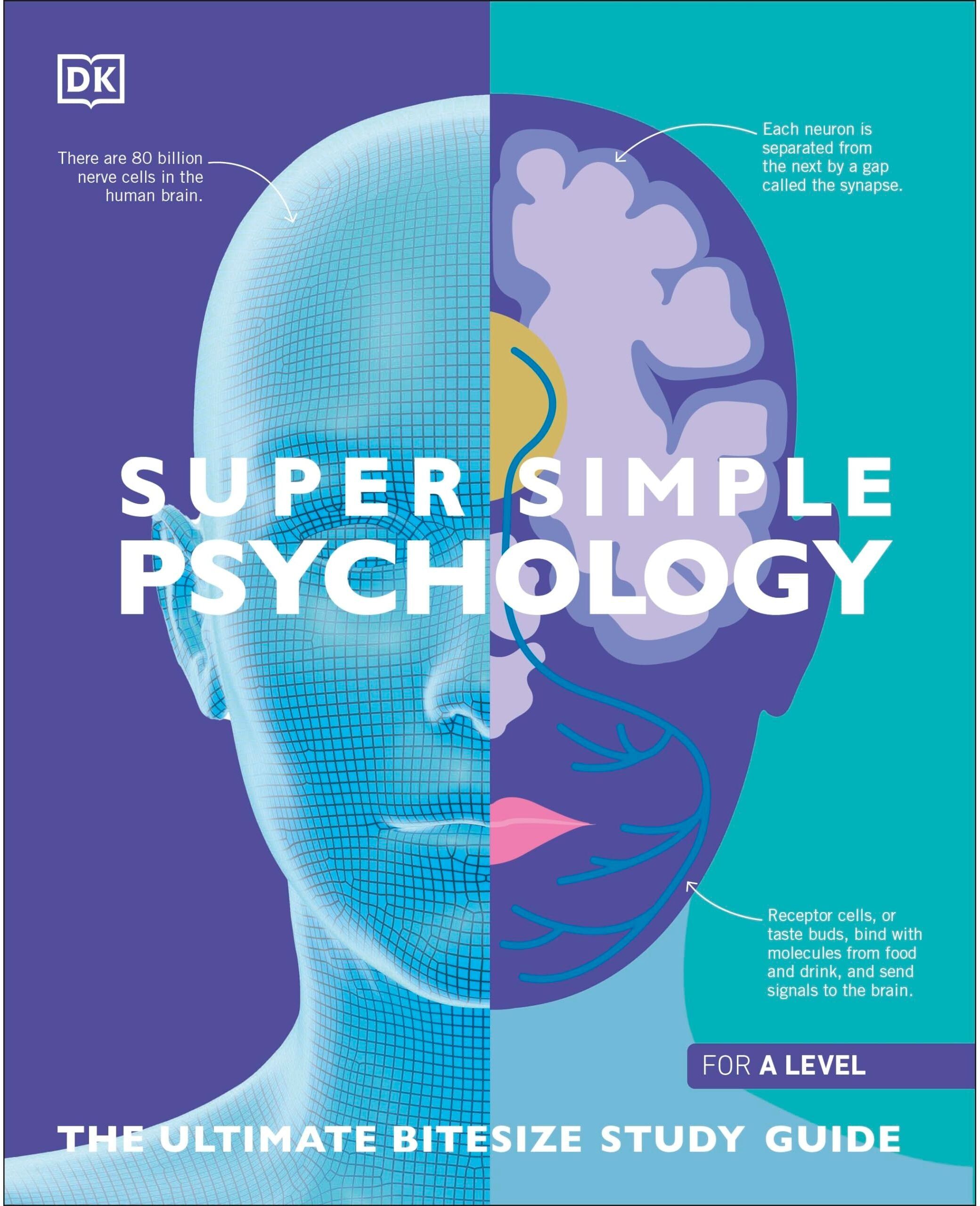
Super Simple Psychology: The Ultimate Bitesize Study Guide (DK Super Simple)Expand your Psychology knowledge with this easy-to-use study guide which has everything A Level students need to get to grips with this fascinating subject. Super Simple Psychology breaks down complex information into manageable, bitesize chunks, and it covers all the key topics, ranging from brain anatomy and memory to phobias and types of therapy. With clear and straightforward coverage of all the core Psychology topics, this is the ideal companion for students looking for concise information to support them with classwork, homework, and exams. This psychology study guide offers: - Material that supports A Level and International Baccalaureate curriculum, complementing coursework and exam revision. - An easy-to-use layout, with one topic per page and key facts for every topic. - Visual explanations that help tackle complex topics and make learning straightforward. Super Simple Psychology contains all the essential topics for A Level Psychology in one handy study guide. Each page covers one topic and is designed and illustrated to make the facts easy to understand and remember and to bring the subject to life. Information panels explain and analyse key theories and studies with the help of simple graphics and a useful "Key facts" box on every page provides a summary to help with revision.6,79 £*Shipping: 2,99 £Secure redirect to the provider
-
Is Simple Present and Present Simple the same thing?
Yes, "Simple Present" and "Present Simple" are the same thing. They both refer to the tense used to describe actions that happen regularly, habits, general truths, and scheduled events in the present time. Both terms can be used interchangeably to describe the basic present tense in English grammar. **
-
Can you help me form or rearrange simple sentences in the Simple Present and Simple Past?
Yes, I can help you form or rearrange simple sentences in the Simple Present and Simple Past. For example, in the Simple Present, you can say "I eat breakfast every morning" or "She goes to the gym after work." In the Simple Past, you can say "I visited my friend yesterday" or "They watched a movie last night." If you have specific sentences you'd like help with, feel free to provide them and I can assist you in forming or rearranging them. **
-
What is the difference between Simple Past and Simple Present?
The main difference between Simple Past and Simple Present is the timeframe they refer to. Simple Present is used to talk about actions that are happening now or regularly occur, while Simple Past is used to talk about actions that were completed in the past. In Simple Present, the verb is in its base form or with an -s ending for third person singular subjects, while in Simple Past, regular verbs end in -ed and irregular verbs have specific past tense forms. **
-
How do I differentiate between Simple Past and Simple Present?
To differentiate between Simple Past and Simple Present, you need to look at the timing of the action. Simple Past is used to talk about actions that happened in the past and are completed. It is formed by adding -ed to regular verbs or using the past form of irregular verbs. On the other hand, Simple Present is used to talk about actions that are happening now, habitual actions, general truths, or scheduled future events. It is formed by using the base form of the verb. By paying attention to the timing of the action and the form of the verb, you can easily differentiate between Simple Past and Simple Present. **
Similar search terms for Simple
-
Simple Living Essex DeskReach for your journals, pens, and markers stored neatly in the three open compartments of this writing desk. Two drawers hold your files and other work essentials, and the central compartment features a grommet hole for mess-free cord management.64,99 $*Shipping: 0,00 $Secure redirect to the provider
-
How do I distinguish between Simple Past and Simple Present?
The Simple Past tense is used to talk about actions that were completed in the past, while the Simple Present tense is used to talk about actions that are happening in the present. To distinguish between the two, look for keywords such as "yesterday," "last week," or specific times that indicate the action happened in the past, which would indicate the use of Simple Past. On the other hand, if the sentence includes words like "now," "currently," or general time markers, it is likely using Simple Present. Additionally, pay attention to the verb forms - Simple Past verbs often end in "-ed" or have irregular forms, while Simple Present verbs typically end in "-s" in the third person singular form. **
-
What is the difference again between Simple Past and Simple Present?
The simple present tense is used to describe actions that are happening right now or regularly occurring actions. For example, "I eat breakfast every morning." On the other hand, the simple past tense is used to describe actions that have already happened in the past. For example, "I ate breakfast yesterday." In summary, the simple present tense is used for present actions or habits, while the simple past tense is used for actions that have already occurred in the past. **
-
Will French Future Simple?
Yes, French does have a future simple tense. It is used to express actions that will happen in the future. The future simple tense is formed by adding specific endings to the infinitive form of the verb. It is a commonly used tense in French to talk about future plans, intentions, or predictions. **
-
What are simple duets?
Simple duets are musical compositions or performances that involve two musicians playing or singing together. These duets typically have straightforward melodies and harmonies, making them easy to learn and perform. They are often used as practice pieces for musicians to develop their skills in playing or singing in harmony with another person. Simple duets can be found in various genres of music, from classical to pop, and are a popular choice for beginner musicians looking to collaborate with others. **
* All prices are inclusive of VAT and, if applicable, plus shipping costs. The offer information is based on the details provided by the respective shop and is updated through automated processes. Real-time updates do not occur, so deviations can occur in individual cases. ** Note: Parts of this content were created by AI.